
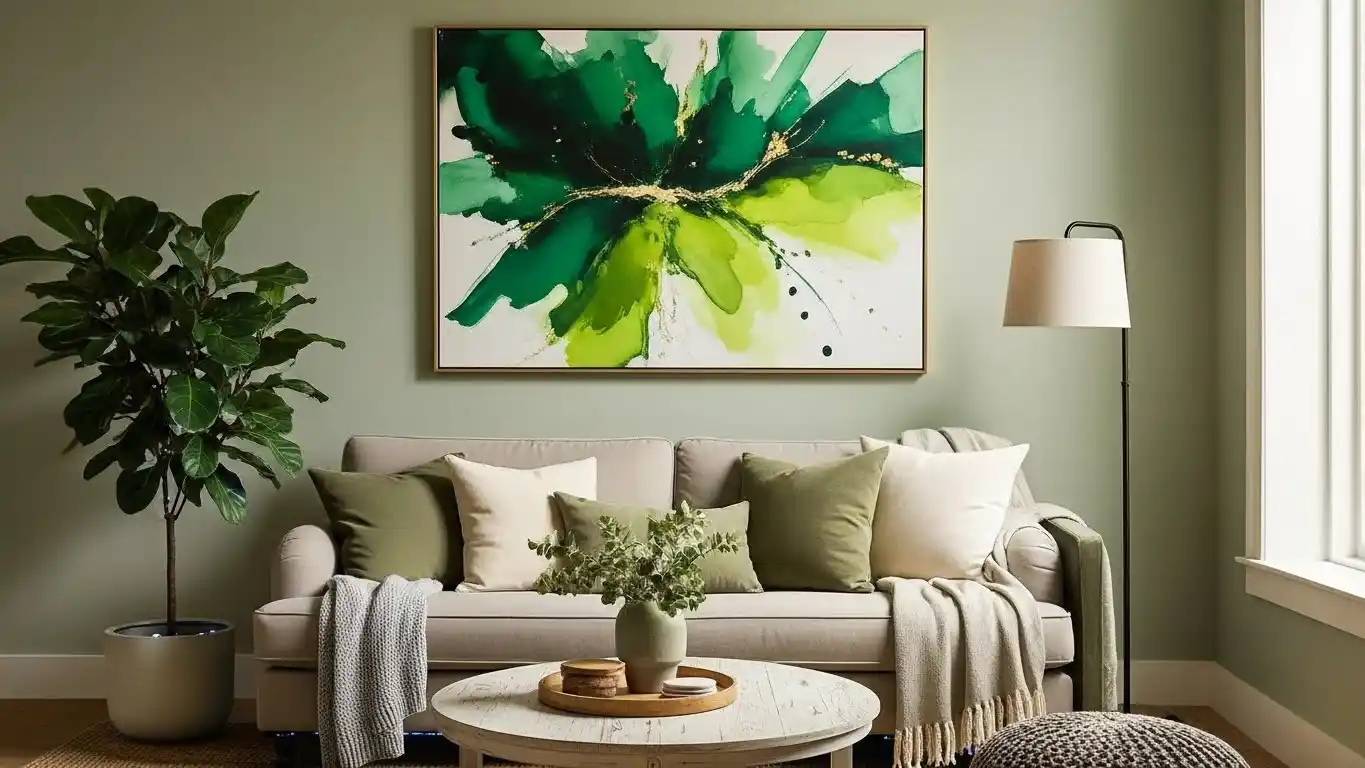
25+ Sage Green Living Room Ideas for Calm Style at Home
A living room can feel fresh and calming while still looking stylish and inviting. Soft, muted tones that sit between gray and green pair beautifully with warm woods, creams, deep blues, and even black accents, giving you plenty of flexibility to match your personal style.
Adding a sage green living room element can help frame your furniture, soften harsh lines, and bring a touch of nature indoors. With careful attention to color, layout, texture, and lighting, the space can feel peaceful for everyday living while remaining polished enough for guests.
25+ Sage Green Living Room Ideas and Layouts
Get inspired with 25+ green living room ideas and layouts that combine style, comfort, and functionality. From furniture placement to color coordination and decor accents, these tips help you create a calm, inviting, and beautifully balanced space.
1 Paint Your Walls Sage for a Calm Base
For a big change in one step, paint all four walls in a soft, gray-based green. The color wraps the space, mutes bright light, and gives your furniture a soothing backdrop.

Choose a matte or eggshell finish so the walls feel soft rather than shiny. In a living room, keep ceilings and trim warm white to stop the room from feeling closed in.
2 Try a Sage Accent Wall Behind the Sofa
If full color feels bold, start with a single accent wall. The wall behind your main sofa works best because it frames the seating area and creates an instant focal point.
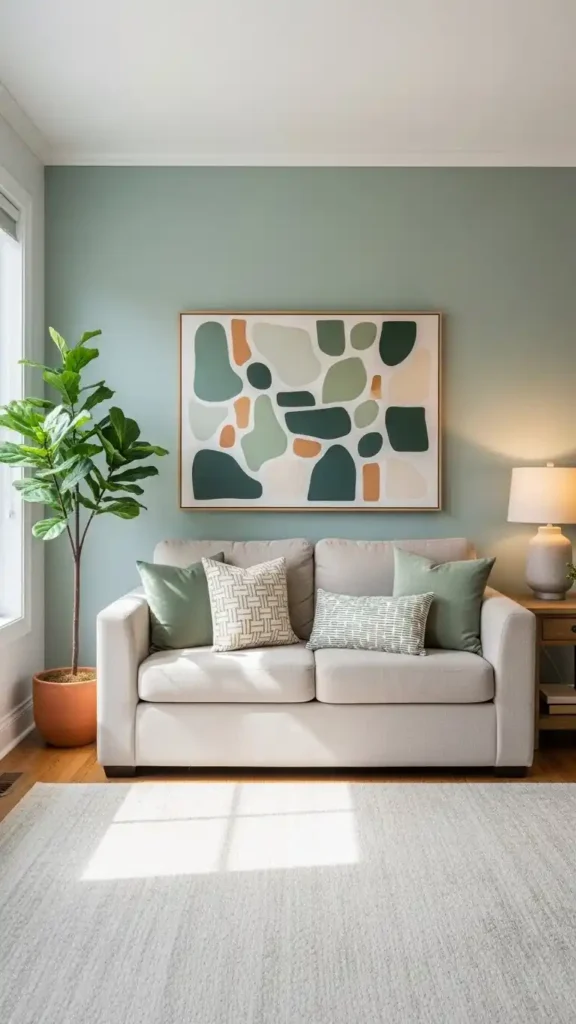
Keep the surrounding walls light and neutral so the accent wall stands out. Hang one oversized artwork or a simple gallery arrangement to break up the block of green.
3 Choose a Sage Sofa as the Star
A sofa in muted green brings color without overwhelming your living space. It looks especially smart on a pale rug, with white or stone walls acting as a calm stage.

Pick a silhouette that matches your lifestyle: low and boxy for modern, or gently curved for a softer look. A [sage green living room] with a colored sofa needs cushions in mixed neutrals to stay balanced.
4 Layer Soft Textiles in Tonal Greens
Textiles are an easy way to test how much green you enjoy. Start with cushions in different shades of sage, eucalyptus, and moss, then add a knitted throw over the arm of the sofa.
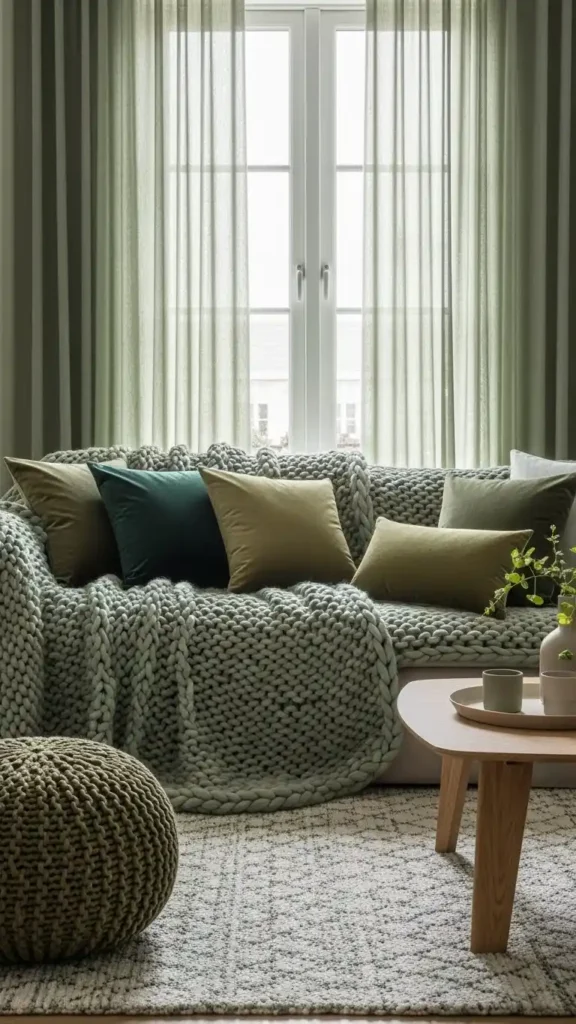
Mix textures like linen, boucle, and cotton rather than heavy patterns. Keep the rest of the room simple so the layered textiles feel intentional, not busy.
5 Combine Sage with Cream and Warm Whites
Cream walls and off-white furniture create a fresh envelope for soft green touches. This pairing keeps things bright while still feeling warm and inviting.

In a green living room, repeat cream on the rug, curtains, and accent chairs. Let green appear in artwork, vases, and one or two key pieces so the balance stays gentle.
6 Add Black Details for a Modern Edge
Slim black lines help sharpen soft colors. Think metal-framed coffee tables, picture frames, or a sleek floor lamp to cut through the sweetness of green.
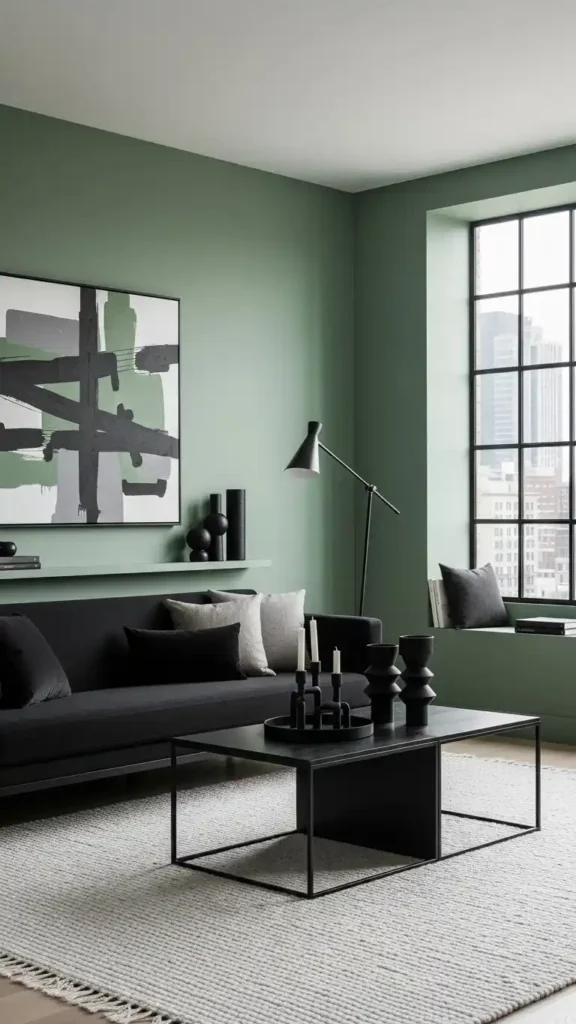
Use black sparingly so the room does not become stark. Three to five black accents, spaced around the space, are enough to give modern living room ideas a clear outline.
7 Mix Sage with Natural Wood for Warmth
Wood and green feel like part of the same landscape. Mid-tone oak, walnut, or ash tables add warmth that keeps the palette from leaning too cool.

Choose a wooden media unit, coffee table, or sideboard that shows natural grain. When wood runs across the room, a living room feels earthy and grounded rather than flat.
8 Style a Minimal Sage Space with Clean Lines
If you love a pared-back look, keep shapes crisp and fuss-free. Straight-armed sofas, boxy side tables, and low, framed art let the color do the talking.

Limit decor to a few well-chosen pieces, such as a sculptural vase or a single stack of books. A restrained layout leaves more negative space, which makes the green read as fresh and light.
9 Build a Cozy Reading Nook in Sage Tones
A small corner can become the most loved spot in the room. Place a snug armchair by a window, add a side table for drinks, and throw a soft blanket over the back.
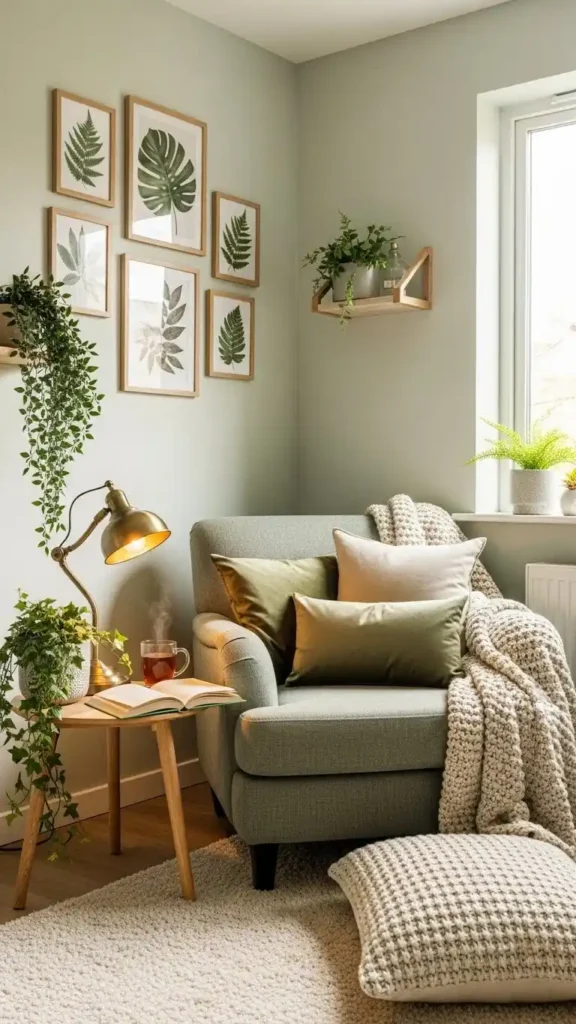
Use sage on the chair, cushion, or wall behind the nook so it feels separate from the rest of the room. That focused color creates a room pocket that invites you to slow down.
10 Use Rugs to Anchor Zones in an Open Layout
In open-plan homes, rugs define where one area ends and another begins. Choose a large rug for the seating zone that sits under the front legs of all chairs and sofas.
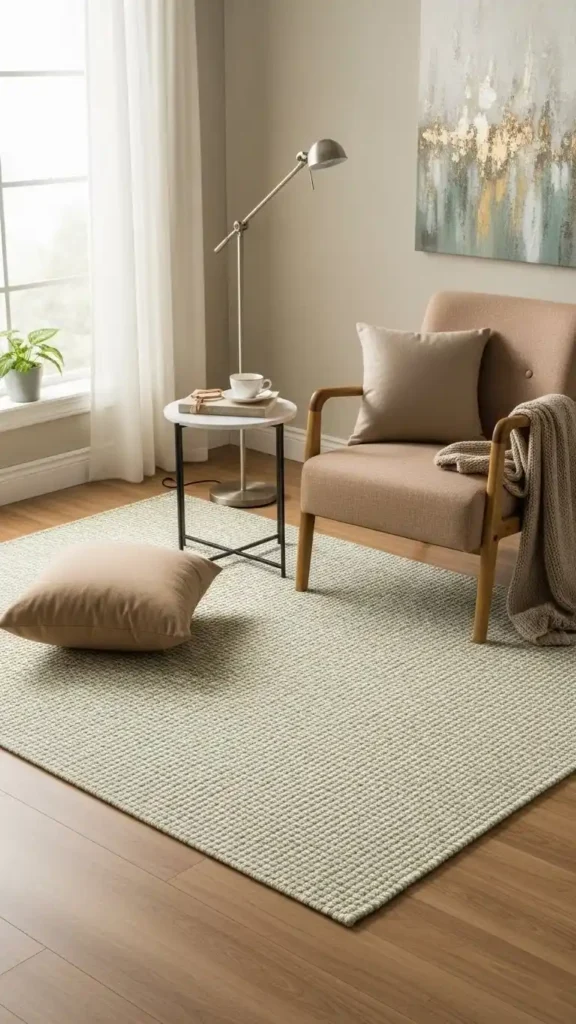
If your walls are green, let the rug stay neutral. If your walls are pale, a rug with tiny sage details can pull the palette downward and make the seating area feel complete.
11 Highlight Sage Walls with Layered Lighting
Sage shifts character under different lights. Combine a ceiling fixture with table lamps and floor lamps so color never feels flat at night.
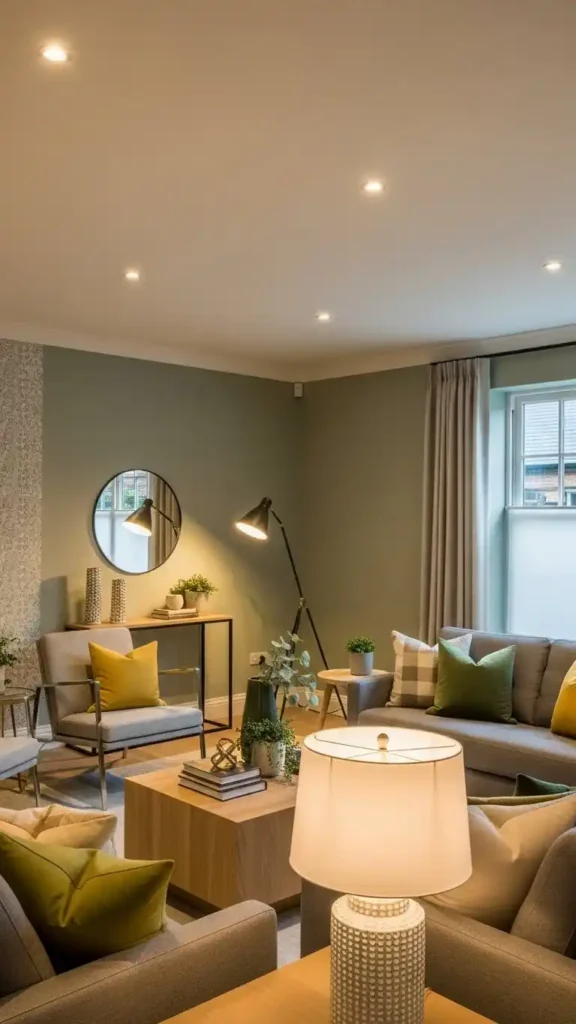
Aim some light across the walls rather than only downward. When light grazes a sage green room wall, you see more depth and subtle shadow, which makes the room feel richer.
12 Dress Windows to Suit Your Color Story
Window treatments can change the whole mood. Sheer white curtains bring in maximum daylight, while linen in oatmeal or stone adds gentle structure.

If you want a little pattern, choose simple stripes or checks that echo your palette. Hang the rod high and wide so the windows feel larger and more open.
13 Make a Small Sage Room Feel Bigger
Soft color can stretch a compact space. Paint walls and skirting in almost the same tone so there are fewer hard lines to stop the eye.
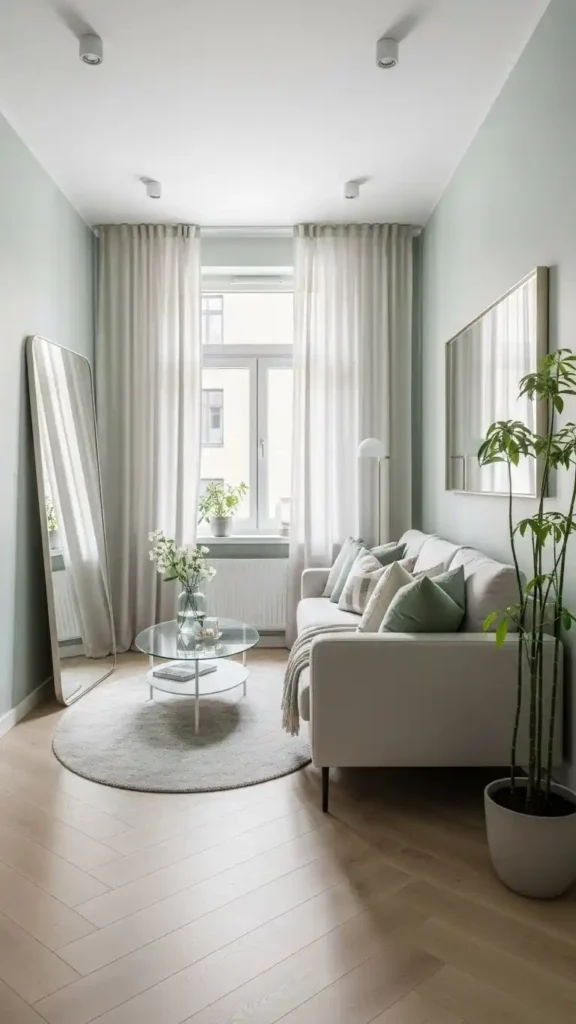
Keep furniture raised on legs to show more floor. A sage green room in a small home works best with slim pieces and carefully chosen decor rather than heavy, blocky shapes.
14 Pair Sage with Blush and Terracotta
For a gentle, romantic feel, blend sage with blush pink and dusty terracotta. Use these warmer shades in cushions, a throw, or small ceramic pieces.
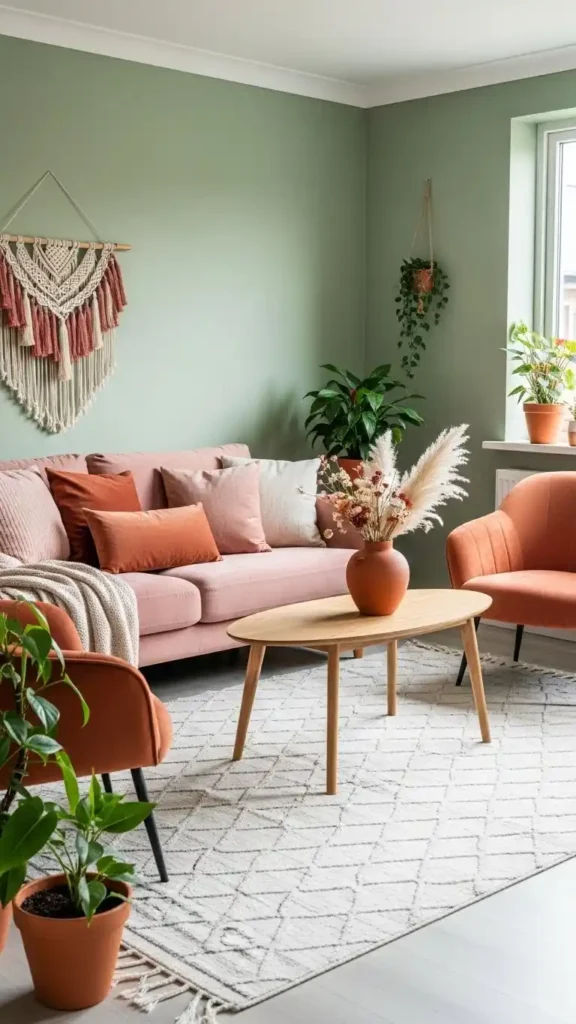
Keep the walls green or neutral so the accents stay soft. Make sure pink and terracotta appear in small bursts rather than all over, or the room may feel too sweet.
15 Create a Farmhouse-Inspired Sage Sitting Room
Sage works beautifully with rustic details. Think plank coffee tables, woven baskets, and checked cushions that echo a country look.
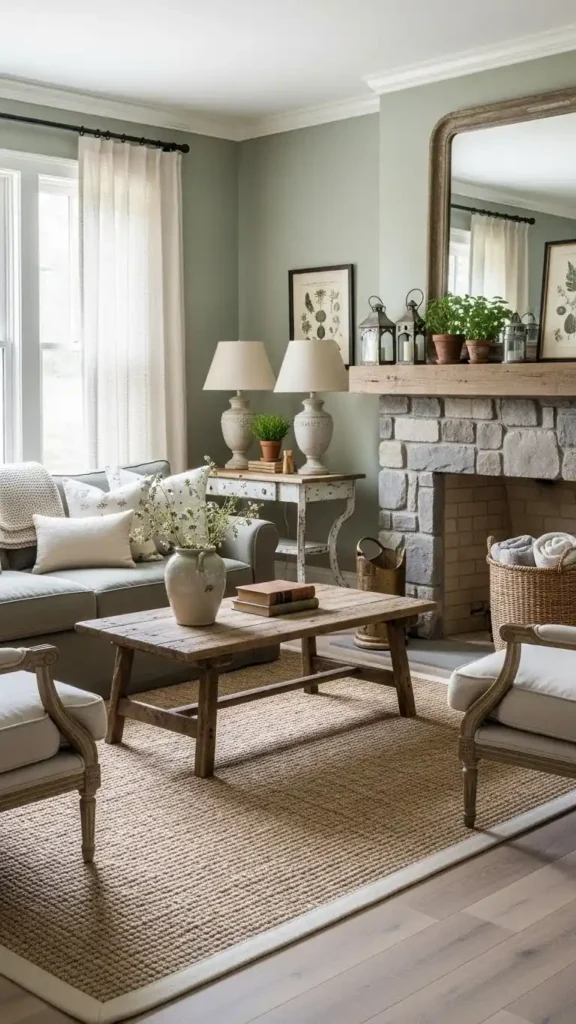
In a farmhouse-style sage green living room, add tongue-and-groove paneling or simple wooden shelves. Style them with pottery, old books, and a few framed prints for a relaxed, homely feel.
16 Go Softer Glam with Brass and Plush Textures
You can still have a touch of glamour with this muted color. Pair sage walls or seating with brushed brass lighting, soft velvet cushions, and a thick, pale rug.

Choose rounded furniture and curvy mirrors to keep the mood gentle. A living room with glam touches works best when metals stay brushed rather than highly shiny.
17 Add Artwork That Picks Up the Green
Art ties your palette together in one glance. Look for landscapes, abstract prints, or botanical pieces that feature muted greens along with your accent colors.

Hang one large piece above the sofa or create a gallery wall around the TV to soften its presence. Keep frame finishes to one or two tones so the display feels calm.
18 Bring in Plants for a Nature-Led Look
Real plants echo the hue on your walls and fabrics. Tall floor plants, trailing vines, and small desk pots add depth and shape.

Vary heights and leaf sizes to keep things interesting. In a plant-filled sage green living room, choose simple planters in white, terracotta, or black to avoid distracting from the foliage.
19 Blend Sage with Stone and Linen for Japandi Calm
Japandi style mixes Japanese calm with Scandinavian comfort. Sage sits perfectly with pale woods, stone pieces, and linen textures.

Choose low, simple furniture and keep surfaces mostly clear. A Japandi-inspired living room benefits from a restrained color range, relying on texture rather than pattern.
20 Refresh a Rental with Removable Sage Touches
If you cannot paint, focus on items you can take with you. Think slipcovers, cushion covers, removable wall decals, and framed prints in soft green tones.

Roll down a large neutral rug to cover the flooring you dislike. A renter-friendly green living roo can feel just as intentional with well-chosen textiles and art.
21 Style a Family-Friendly Yet Grown-Up Space
Family rooms see a lot of daily life, so colors need to handle wear. Sage hides small marks better than bright white yet still looks smart.

Choose washable slipcovers and sturdy fabrics in mid-tones. A family living room in this palette feels calm for adults, but not too formal for children and pets.
22 Switch Up Your Sage Scheme for Spring and Summer
As seasons change, swap accessories rather than main furniture. For warmer months, add fresh whites, light woods, and small hits of yellow or sky blue.
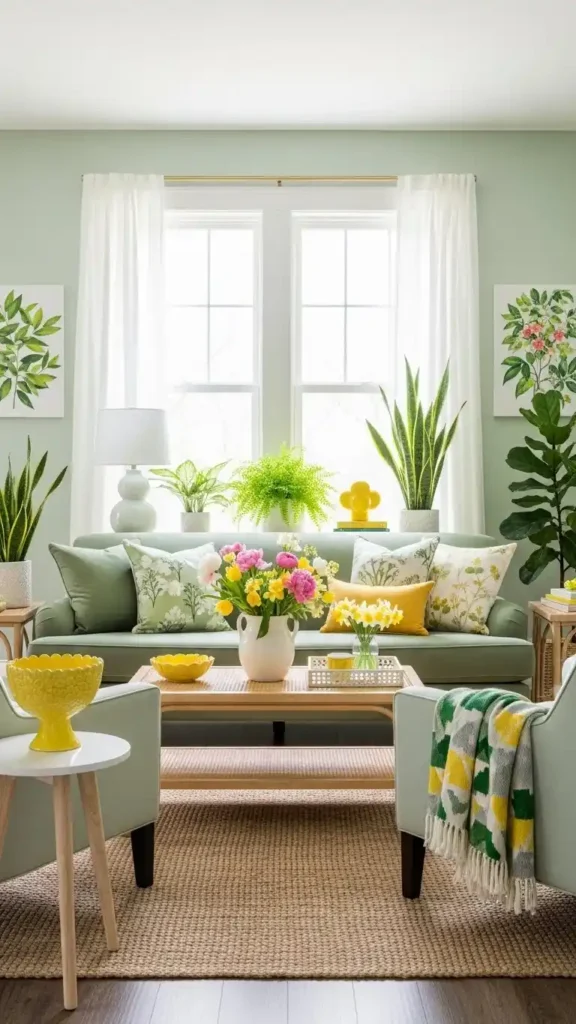
A Green room in summer looks lovely with glass vases, fresh flowers, and sheer curtains that move with the breeze. Store heavy blankets away until cooler weather returns.
23 Warm Up Sage for Autumn Evenings
When the air cools, lean into richer textures. Bring out knitted throws, wool cushions, and candlelight to deepen the mood.

Accent colors like rust, mustard, and deep plum sit well against green. A softly lit sage green living room with layered textiles feels snug without turning dark.
24 Layer Sage with Subtle Holiday Decor
You do not need to abandon your palette at holiday time. Mix in paper stars, string lights, and simple wreaths made from eucalyptus or pine.
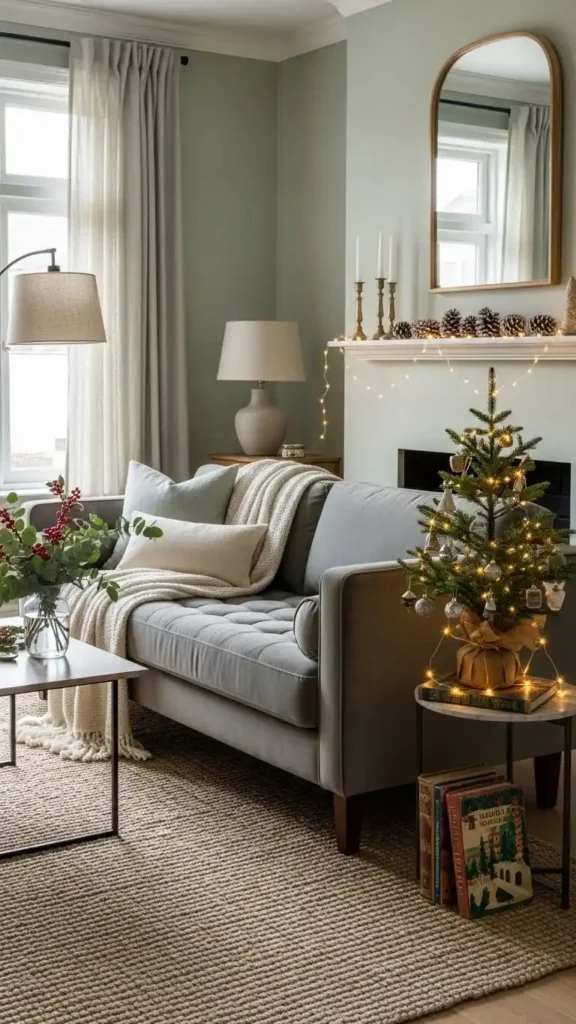
Keep decorations mostly white, wood, and soft metallics so they echo your everyday colors. A seasonal green living room can feel festive yet calm, perfect for low-key gatherings.
25 Plan Storage That Blends with the Palette
Good storage keeps visual noise down. Low cabinets, benches with hidden compartments, and built-in shelves hold clutter away from sight.
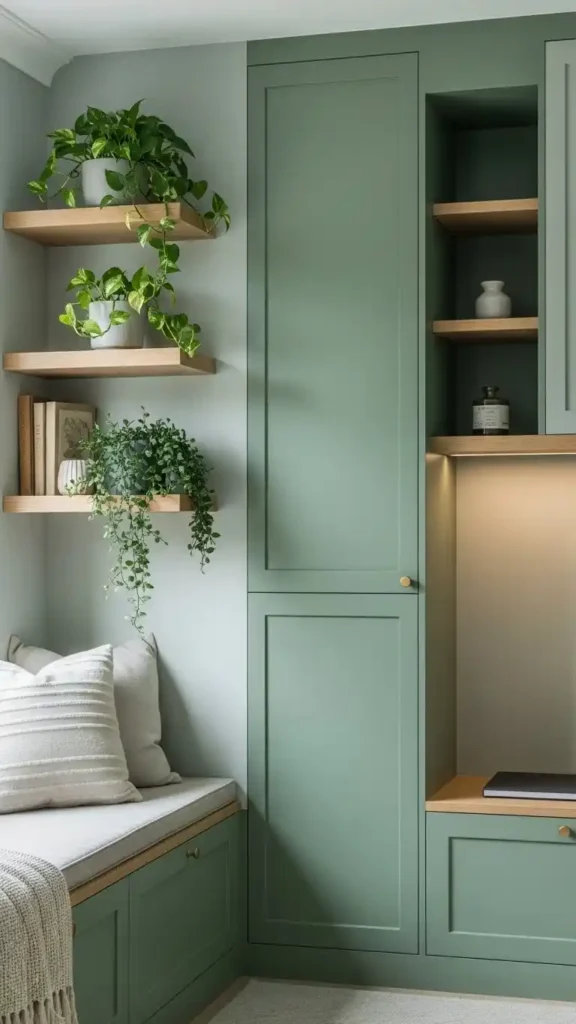
Paint built-ins to match the wall color so they recede. When storage melts into a sage green living room background, decor and furniture can shine without mess.
26 Shape a Multi-Use Living and Working Zone
Many homes now need a place to relax and work. Use color and layout to define each zone without putting up walls.
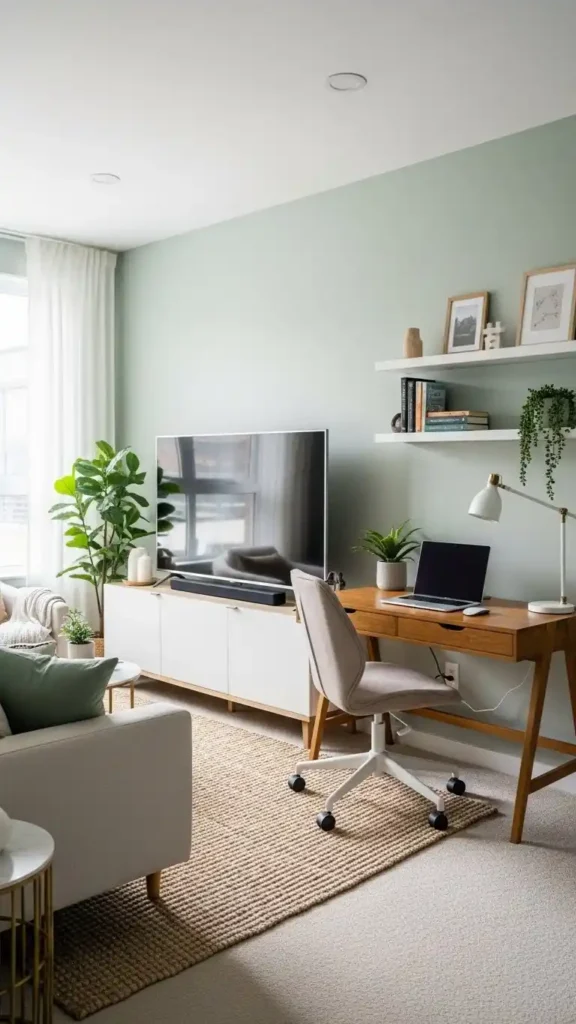
Position a compact desk near a window and keep its chair slim and simple. A shared [living room] and workspace works best when both areas share the same palette so the room still feels united.
How to Choose the Perfect Sage Green Shade for Your Living Room?
Choosing the perfect sage green shade for your living room starts with considering the natural light in the space. Lighter tones work well in darker rooms to open up the area, while deeper, muted greens add richness to bright, sunlit spaces. Test paint samples on different walls and observe them at various times of day to ensure the color complements your furniture, flooring, and overall style. By taking time with this step, you’ll create a calming, cohesive foundation for your green living room ideas.
Pro Tips for Sage Green Living Room Ideas
- Plan your color palette starting with the largest surfaces. Begin with wall color, then select the rug, main seating, and finally smaller accents to create a balanced green living room.
- Test samples together on the floor and observe them in both daylight and evening light. Ensuring all tones and textures work in different lighting makes the space feel calm, harmonious, and thoughtfully designed.
- Layer textures and materials such as soft throws, cushions, and natural wood accents to add warmth and depth without overwhelming the sage green theme.
- Keep accent pieces minimal but intentional to maintain a serene and connected living room feel.
Conclusion
Sage green living room offers a rare mix of softness and style, giving you color without shouting. With smart layout choices, layered lighting, and thoughtful textures, you can shape a room that feels gentle enough for rest yet still polished for guests.
Whether you lean rustic, minimal, glam, or somewhere in between, there is a way to weave this hue into your living space. Start with one idea that fits your home, then build slowly until the room reflects how you want to feel every day.