
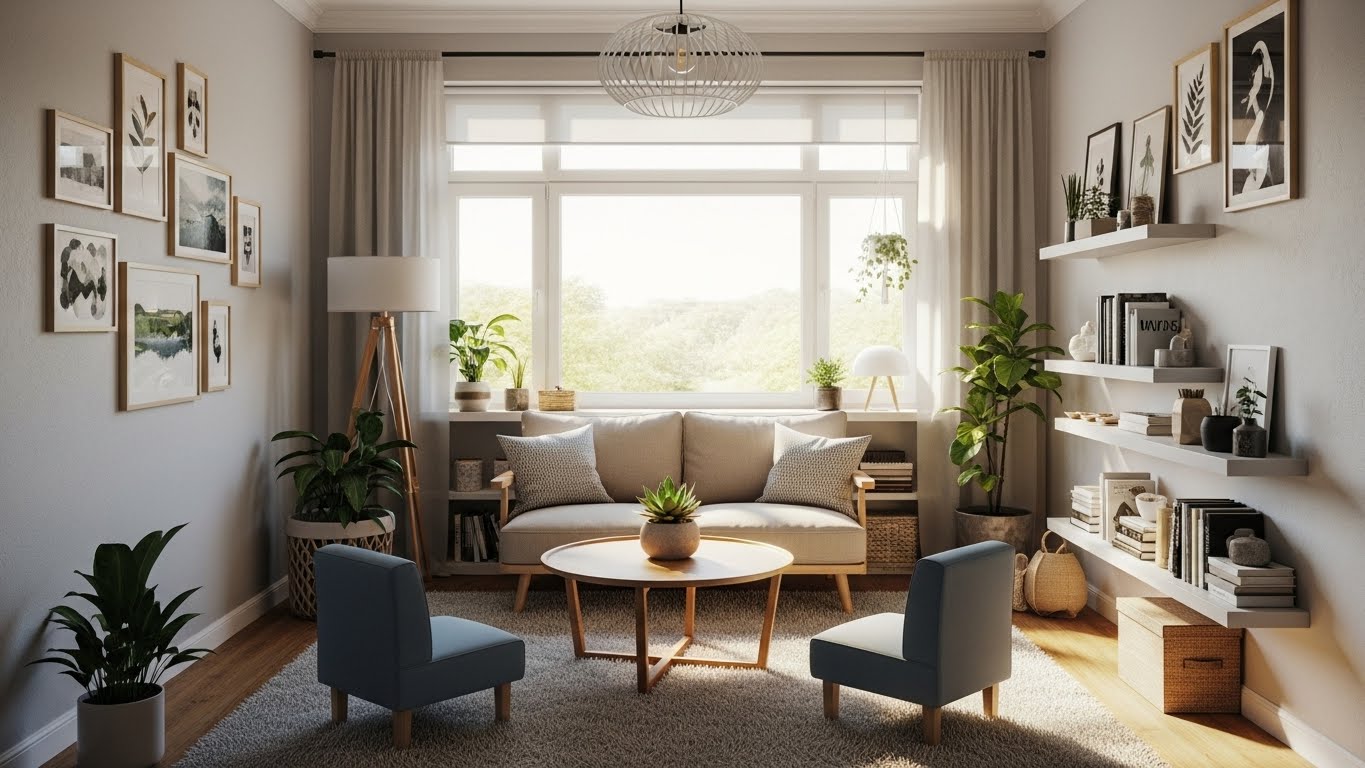
16+ Best Small Living Room Ideas: Cozy & Spacious Designs
Living in a small space can quickly go from “cute and cozy” to “cluttered and stressful” if it isn’t set up right. You might feel like you’re constantly bumping into furniture, struggling for storage, or trying to balance style with practicality. If that sounds familiar, these Small Living Room Ideas are designed to help you make the most of your space while keeping it stylish and functional.
With smart layouts, clever décor tricks, and furniture that maximizes space, even the tiniest living room can feel open, comfortable, and inviting. These tips focus on improving flow, adding personality, and transforming small living spaces into cozy, practical areas perfect for relaxing or entertaining.
16+ Small Living Room Ideas for a Cozy, Stylish Space
1. The Magic of Mirrors
Mirrors are one of the easiest and most powerful tools in a small living space. When you place a large mirror opposite or next to a window, it reflects natural light into the room, instantly making it feel brighter and more open. Even in darker rooms, a well-placed mirror can bounce lamp light around and soften shadows.

You’re not limited to a basic rectangular wall mirror, either. Try a big floor mirror leaning against the wall to add drama and depth, or create a gallery wall of smaller mirrors in different shapes and frames for a stylish focal point. Mirrors visually extend your walls and trick the eye into thinking there’s more space than there actually is.
2. Choose Leggy Furniture
Chunky furniture that sits flat on the floor can make a small room feel heavy and crowded. Instead, look for sofas, chairs, and sideboards with visible legs. When you can see the floor underneath your furniture, the room feels lighter and more spacious.
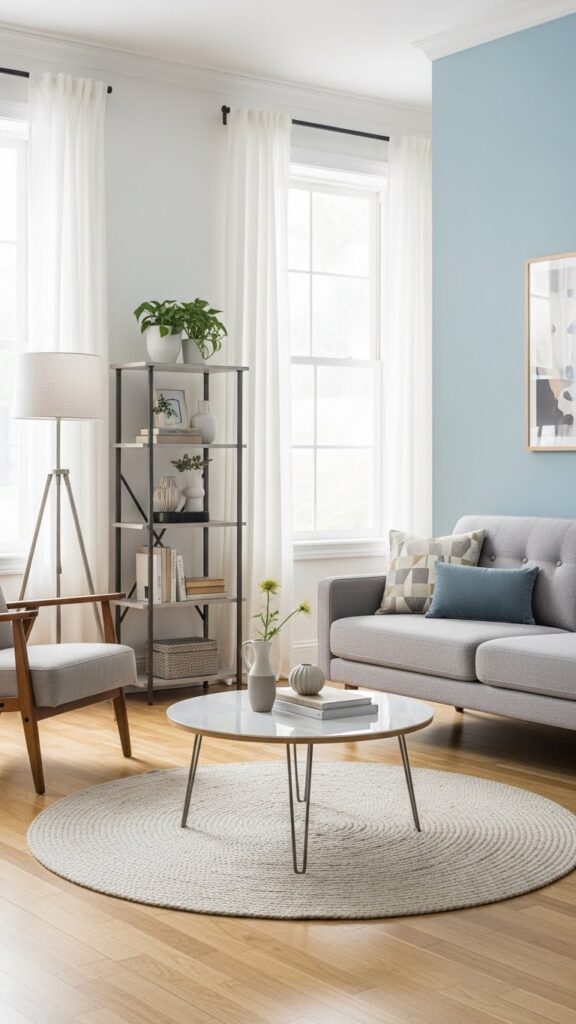
Mid-century modern pieces are perfect for this – they usually have slim, tapered legs and low, clean lines. Even swapping one big, boxy sofa for a sofa with legs can change the entire feel of the room. The extra “negative space” under and around your furniture lets light move more freely and keeps the room from feeling boxed in.
3. Go Vertical with Storage
When floor space is limited, it’s time to start thinking up instead of out. Use vertical space by installing floor-to-ceiling bookshelves, tall cabinets, or floating shelves. This not only adds storage but also draws the eye upward, making your ceilings feel higher and the room taller.
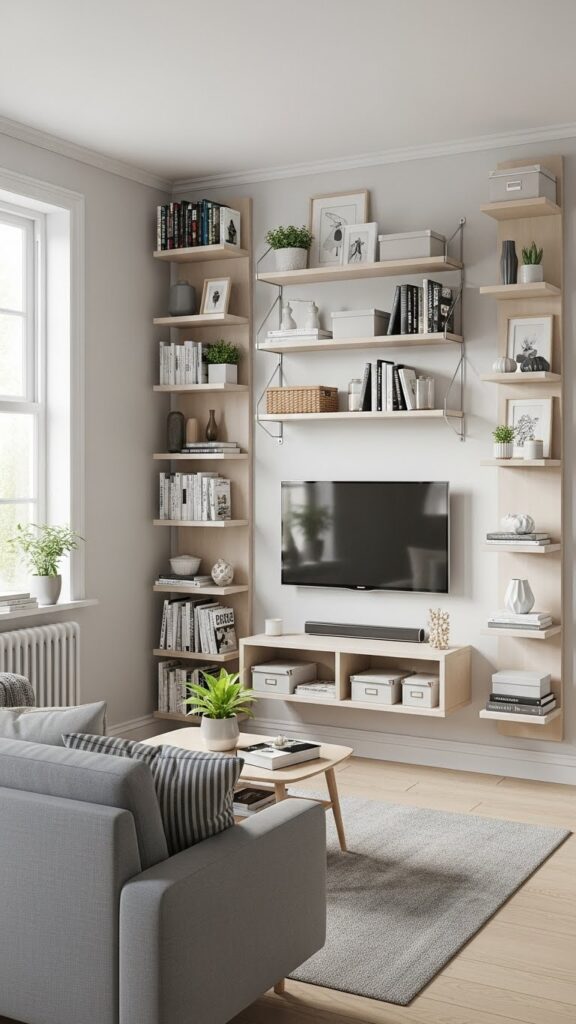
High shelving is ideal for things you don’t need to reach constantly – books, framed photos, plants, or decor. It keeps everyday surfaces clear and stops clutter from building up on your coffee table or TV stand. Vertical storage also adds some architecture and personality to plain walls, which helps your small living room feel more designed and less “boxy.”
4. The Acrylic Coffee Table
In a tight room, visual weight matters just as much as actual size. A big, dark wooden coffee table can dominate the center of the room and make it feel cramped. An acrylic or glass coffee table, on the other hand, gives you a place to put drinks and remotes without blocking the view of the floor or rug.
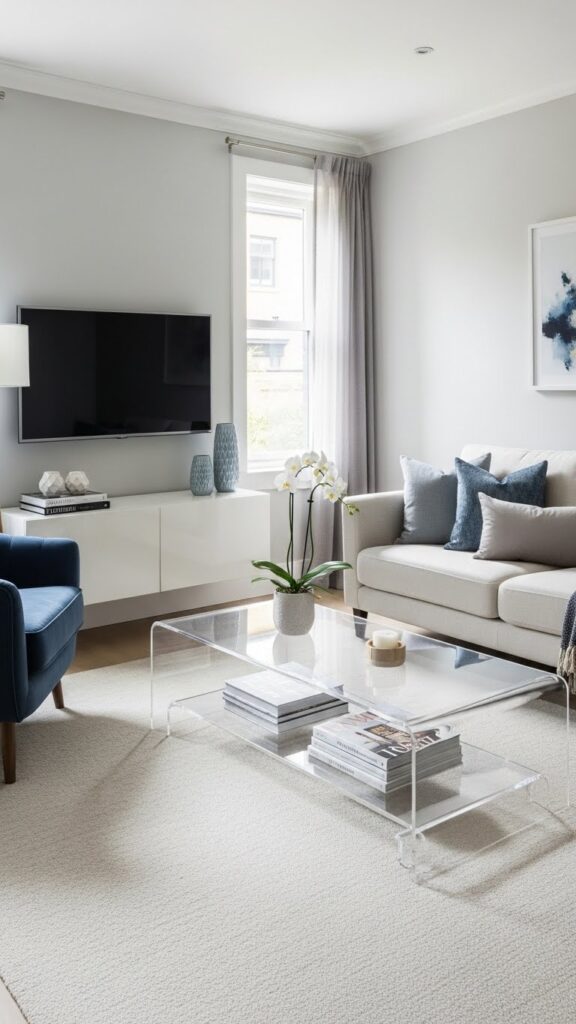
This kind of “ghost furniture” almost disappears into the room, making the space feel airy and open. It’s especially helpful if your living room is also a walkway between other parts of your home. You still get function, but your eye sees right through it, so the room feels less crowded.
5. Wall-Mounted Lighting
Floor lamps and chunky table lamps take up more space than you think. In a small living room, consider switching to wall-mounted lighting, like sconces or swing-arm lamps. Mount them on either side of your sofa or above a reading chair for cozy, focused light that doesn’t steal any floor or table space.
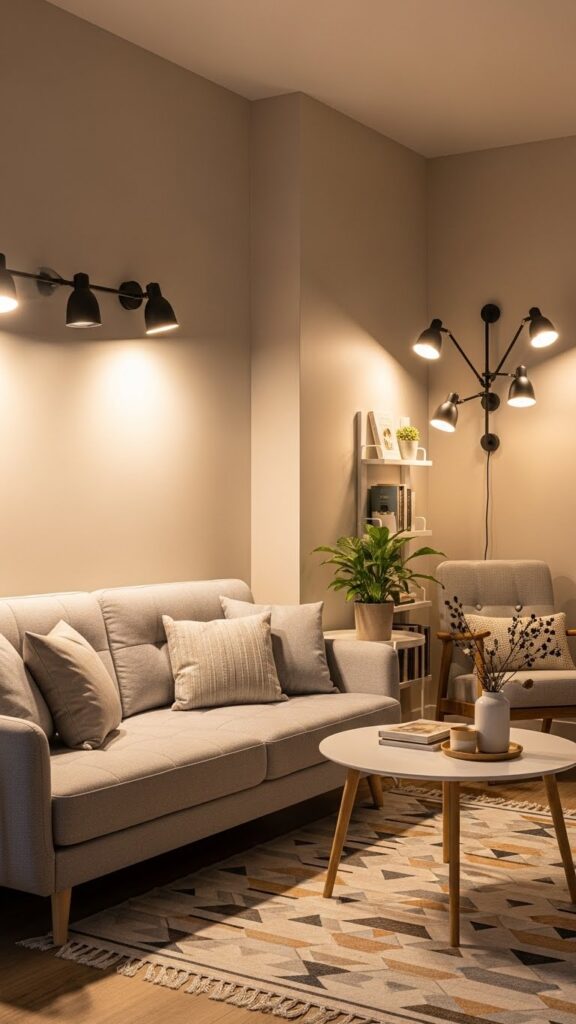
The best part? Many modern sconces are plug-in, so you don’t need to call an electrician. You just screw the fixture into the wall and plug it into a nearby outlet. Wall lights instantly make a room feel more custom and high-end, while freeing up your side tables for essentials like drinks, books, and your phone.
6. Hang Curtains High
Hanging curtains at the wrong height can accidentally “shrink” your room. Instead of mounting the rod just above the window frame, hang your curtains as close to the ceiling as possible and extend the rod wider than the actual window. This makes the window look bigger, and the walls look taller.
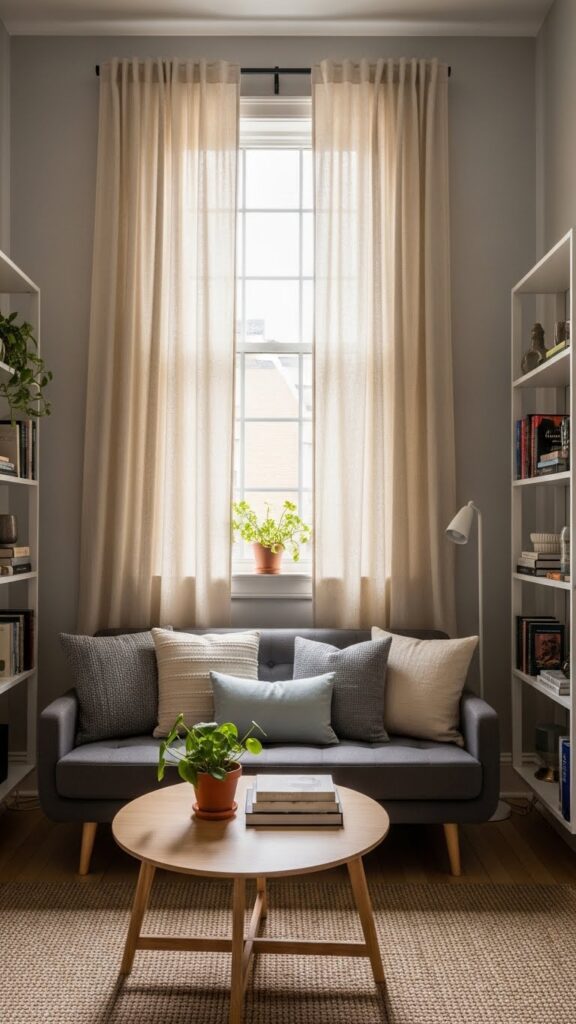
Choose floor-length curtains that either skim or lightly “kiss” the floor. Light, airy fabrics like linen or cotton in white, beige, or soft grey let plenty of light through while still giving you privacy. Avoid heavy, dark curtains that block light and visually weigh down the room – especially if you already have limited sunlight.
7. The Neutral Color Palette
Color can completely change how big or small a room feels. Light tones like soft white, cream, beige, and light grey reflect more daylight and make the walls feel farther away. Painting your walls in these shades gives your living room a calm, open backdrop instead of a closed-in feeling.
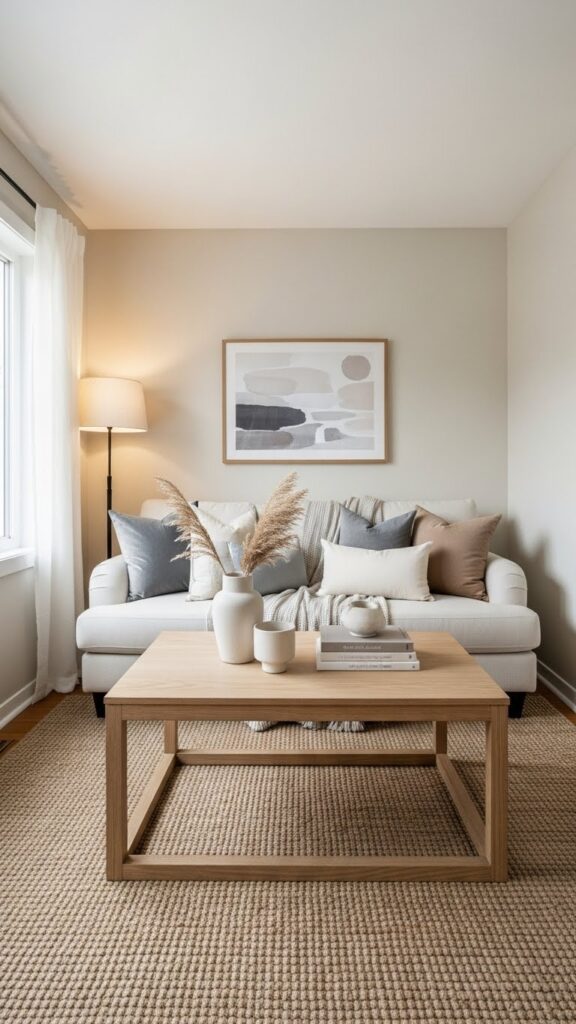
Keep large furniture like your sofa, rug, and big storage pieces neutral as well to prevent visual clutter. That doesn’t mean your room has to be boring – you can still add personality with textures (knits, linen, wood, metal) and pops of color in smaller accents like pillows, throws, art, and plants. A neutral base creates a peaceful foundation that makes even a tiny living room feel more spacious.
8. Multi-Functional Furniture
In a small space, every item needs to pull its weight. Look for multi-functional furniture that does more than one job. Some great options:
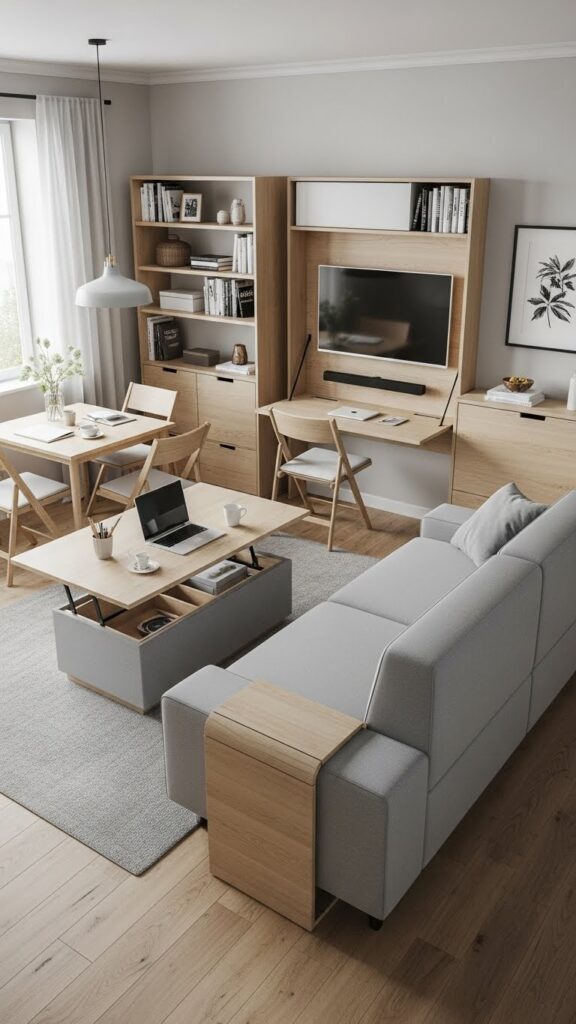
- Ottomans with storage inside – extra seating, footrest, coffee table (with a tray), and hidden storage in one
- Lift-top coffee tables – regular table on the outside, hidden storage, and a laptop-friendly desk on the inside
- Sofa beds or daybeds – seating by day, guest bed by night
These pieces reduce the need for extra furniture, which keeps your floor plan open and flexible. Instead of cramming in separate pieces for every function, choose a few clever items that adapt to your life.
9. The Large Area Rug
It’s tempting to buy a small rug to “fit” a small room, but that often backfires. Tiny rugs make the room feel chopped up and cramped. Instead, choose a larger area rug – ideally one where the front legs of all your main furniture (sofa, chairs, coffee table) sit on top of it.
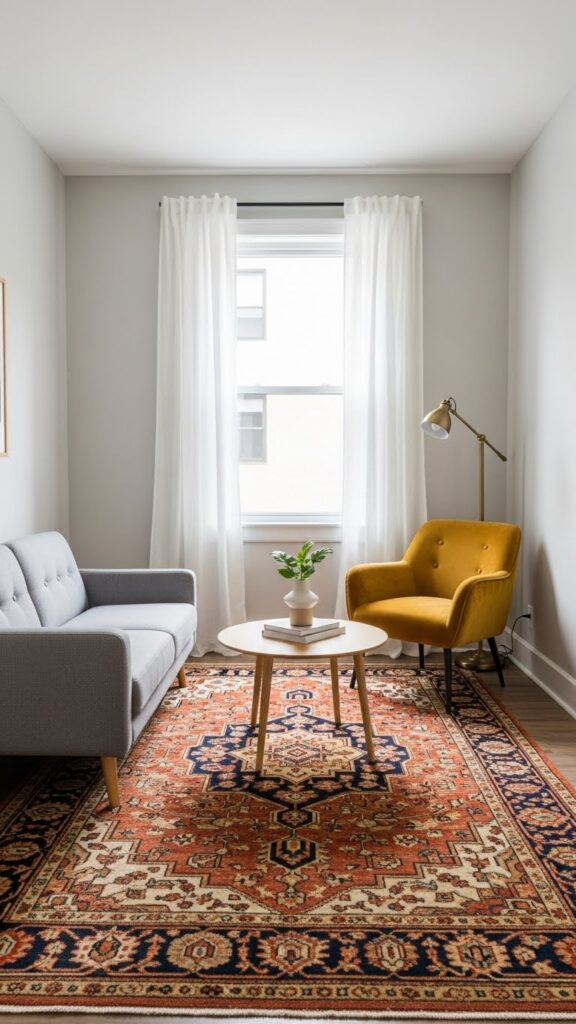
A bigger rug visually unifies the space and makes it feel like one coherent seating zone, rather than scattered furniture pieces floating in the room. Stick to lighter colors or subtle patterns so the floor still reads as open. A large rug anchors your space and gives your living room a more finished, intentional look.
10. Floating Media Console
Big, heavy TV units can overwhelm a small living room. A floating media console, mounted on the wall under your TV, solves that problem. Because the floor underneath stays visible, the room feels more open and less weighed down.
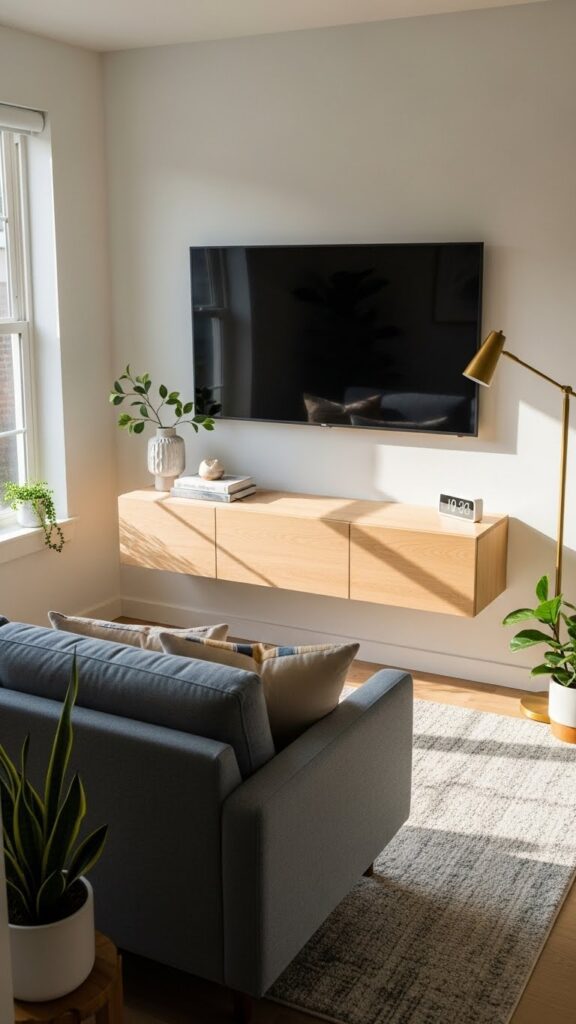
Many floating units have closed storage for electronics, game consoles, remotes, and cables, which helps keep visual clutter under control. You can also slide a basket or two underneath for things like blankets or kids’ toys. The clean lines of a wall-mounted console work especially well in modern or minimalist spaces.
11. Scale Down the Sofa
An oversized, deep sectional might be comfortable – but in a small living room, it will take over the entire space. Instead, look for an apartment-sized sofa, loveseat, or a small sectional that’s scaled to the room. Features to look for:
- Narrow arms to save inches
- Shallower seat depth, so it doesn’t stick too far into the room
- Slim back rather than big, bulky cushions
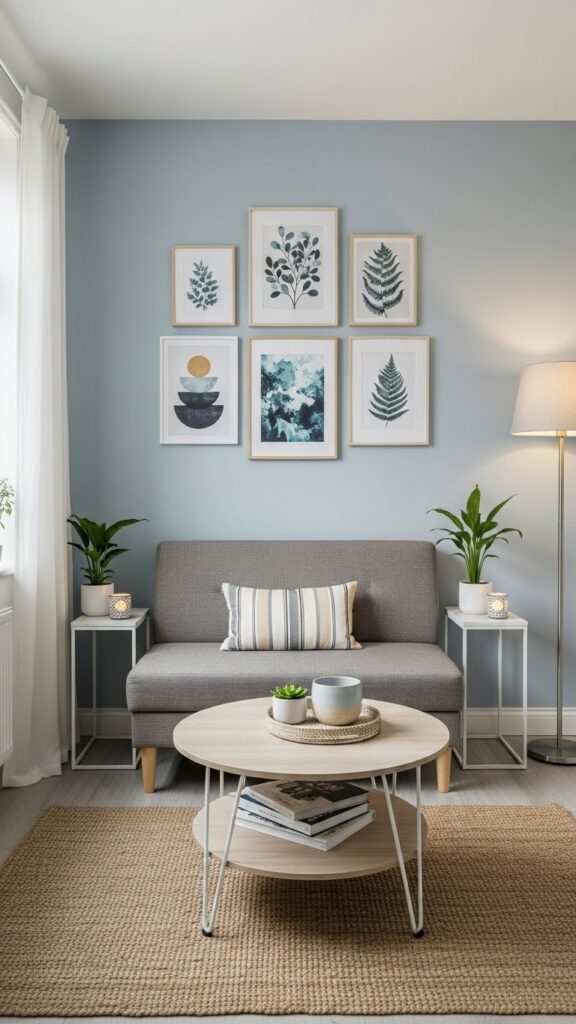
You can always pair a smaller sofa with two petite accent chairs or stools to create enough seating for guests. The goal is to have a cozy seating area that leaves enough room to walk around comfortably without squeezing past furniture.
12. Use Corners Wisely
Corners are often wasted space, especially in small living rooms. Instead of letting them sit empty, turn corners into functional spots:

- Add a corner bookshelf for storage and display
- Create a reading nook with a small armchair and a floor lamp
- Use an L-shaped sectional that fits snugly into the corner to maximize seating
By purposefully using corners, you make the room feel complete and intentional, not like everything’s just floating in the middle. Thoughtful corner use can add storage, extra seating, or a cozy little retreat without shrinking your main walkway.
13. Ditch the Coffee Table.
In very narrow or small living rooms, even a modest coffee table can block traffic flow. If you’re constantly walking around it, consider skipping a traditional coffee table altogether.
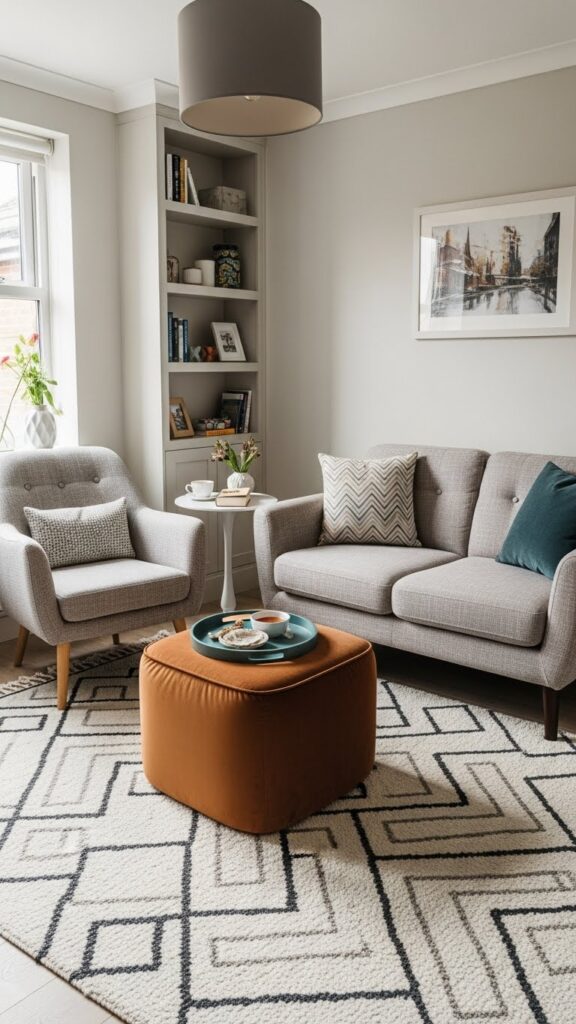
Instead, try:
- Two small nesting tables that you can move around as needed
- A C-shaped side table that slides under the sofa and over your lap
- A storage ottoman that you can push to the side when you need more floor space
These flexible pieces give you surfaces when you want them and clear space when you don’t. It’s a simple swap that can make your room feel much easier to move around in.
14. Embrace Minimalism
In a small living, clutter is your enemy. Every object you see takes up mental space as well as physical space. Leaning into minimalism – at least in this one room – can make a huge difference.
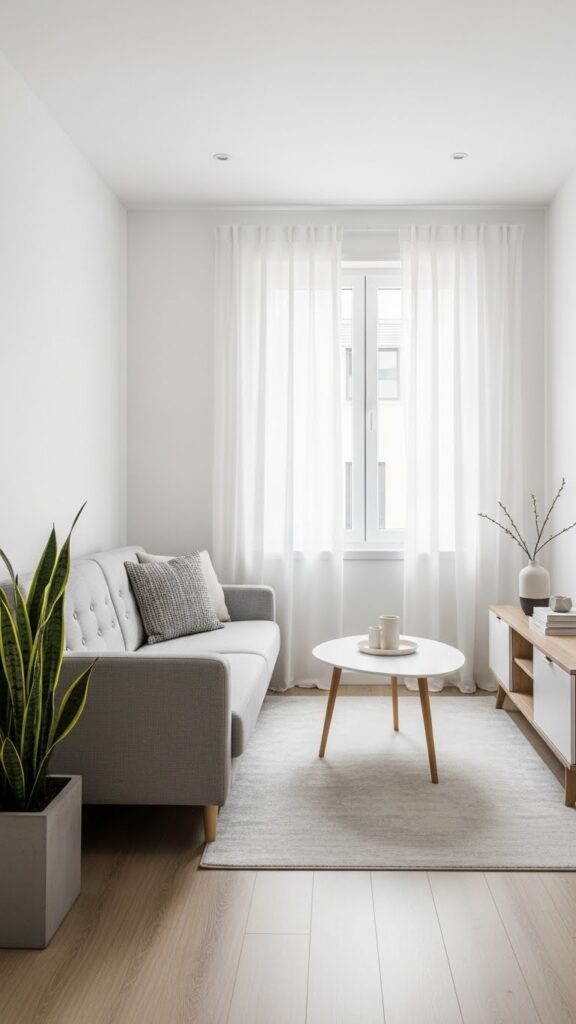
That doesn’t mean your living room has to look empty. It just means:
- Being picky about what stays out on display
- Keeping surfaces mostly clear
- Storing extras (blankets, remotes, chargers, random mail) in closed storage like baskets, bins, or cabinets
Leave some negative space – empty wall, empty floor, empty shelf areas – to let your eyes rest. The room will instantly feel calmer and more spacious, even if nothing physically changed in size.
15. The Accent Wall
While light, neutral walls are usually best for small rooms, a single accent wall can actually add depth and interest. Painting one wall a deep color like navy, charcoal, forest green, or even a rich terracotta can make that wall look like it recedes slightly.
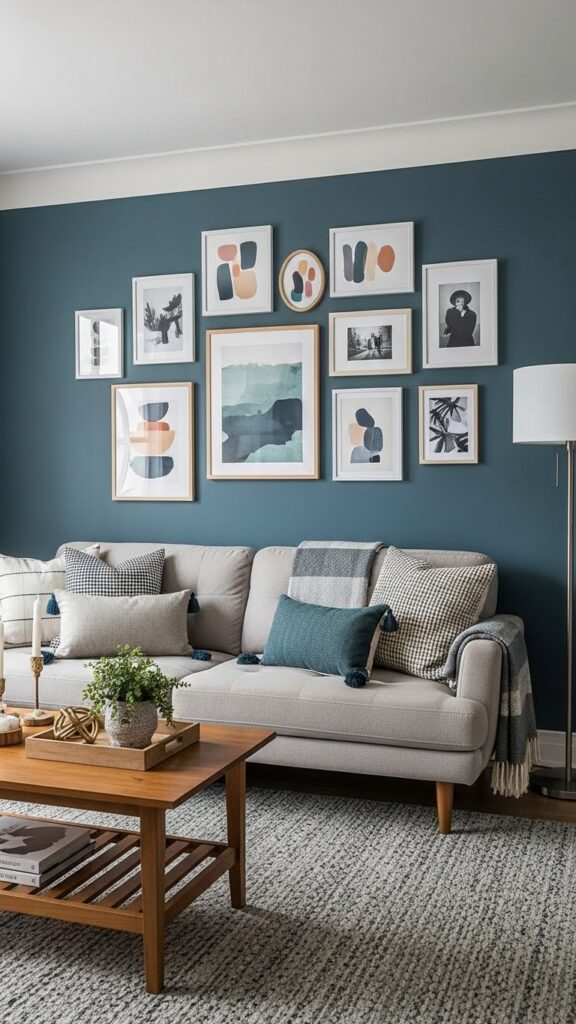
A great spot for an accent wall is often behind the sofa or TV. Pair the darker wall with light-colored furniture and decor in front of it so the room doesn’t feel heavy. This contrast adds drama and style, and it draws attention to your favorite part of the room instead of its size.
16. Plants for Life
Plants bring literal life into a small living room without overwhelming it. A tall, slender plant in a corner draws the eye upward, emphasizing height. Hanging plants or trailing plants on high shelves adds greenery without using any floor space.
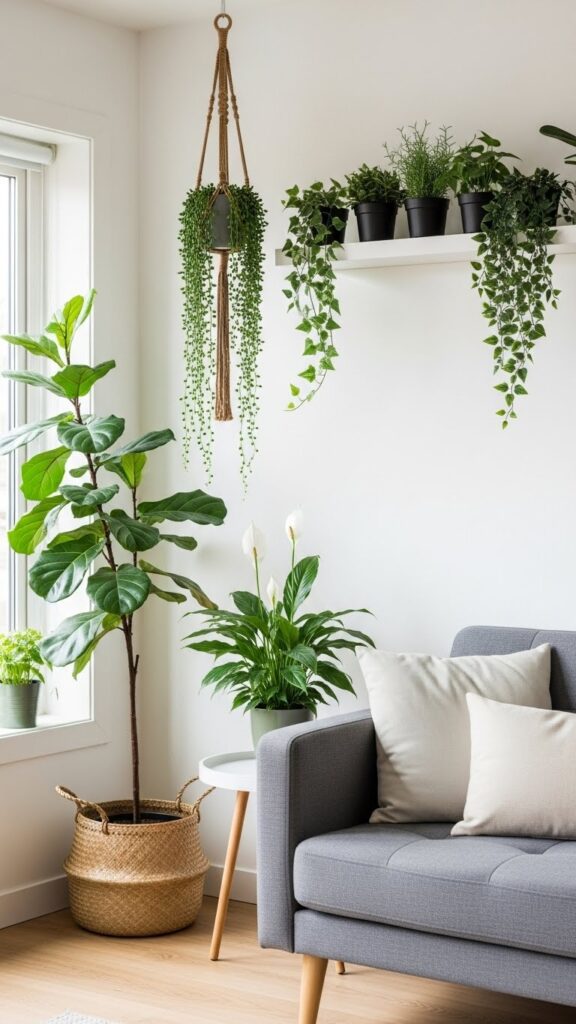
Choose low-maintenance varieties like Snake Plants, Pothos, or ZZ Plants if you’re not a natural plant parent. Greenery softens hard lines from furniture and electronics, making the room feel more welcoming and relaxed. Even just one or two plants can transform the vibe of a compact space and make it feel fresher.
17. Smart Use of Decorative Baskets (Bonus Idea)
Baskets are a small living best friend. Keep one or two stylish baskets near your sofa to quickly stash throws, extra pillows, kids’ toys, or even magazines when you want the room to look tidy.

Because baskets come in different textures – woven seagrass, rattan, cotton rope – they double as decor and storage. They’re easy to move around and don’t feel as heavy as another piece of furniture or a plastic bin. This is especially handy in living rooms that also function as playrooms or home offices.
Cozy Tips for Small Living Room Layouts
Looking to maximize your space and style? These Small Living Room Ideas will help you create a cozy, functional, and visually appealing living area:
- Use multifunctional furniture like ottomans with storage or sofa beds to save space and add practicality.
- Opt for light colors on walls and furniture to make the room feel larger and more open.
- Create vertical storage with shelves, tall cabinets, or wall-mounted units to free up floor space.
- Keep pathways clear to improve flow and make the room feel uncluttered.
- Add mirrors strategically to reflect light and visually expand the space.
- Choose furniture with slim profiles to avoid overwhelming a small living area.
- Layer textures and textiles with rugs, cushions, and throws to add warmth and coziness.
- Use lighting wisely by combining ceiling lights, floor lamps, and table lamps for a bright and inviting atmosphere.
Conclusion
Designing a small living room isn’t about sacrificing the style or pieces you love; it’s about making smarter choices that work with your space instead of against it. By focusing on scale, lighting, vertical storage, and clever visual tricks, even a tiny living room can feel cozy, functional, and beautifully styled.
These Small Living Room Ideas are a great starting point—experiment with what works best for your home, and you’ll see that you don’t need a large space to create a comfortable, stylish, and inviting living area. With the right approach, small living spaces can be transformed into practical, charming, and perfectly organized rooms.